America’s Voters Punished a Government Over Prices. Australia’s Voters Have Never Punished One Over First Nations Rights.
An American election will not save Victoria’s Treaty. For First Nations justice in Australia, the Democratic sweep of 3 November 2026 offers encouragement, nothing more.
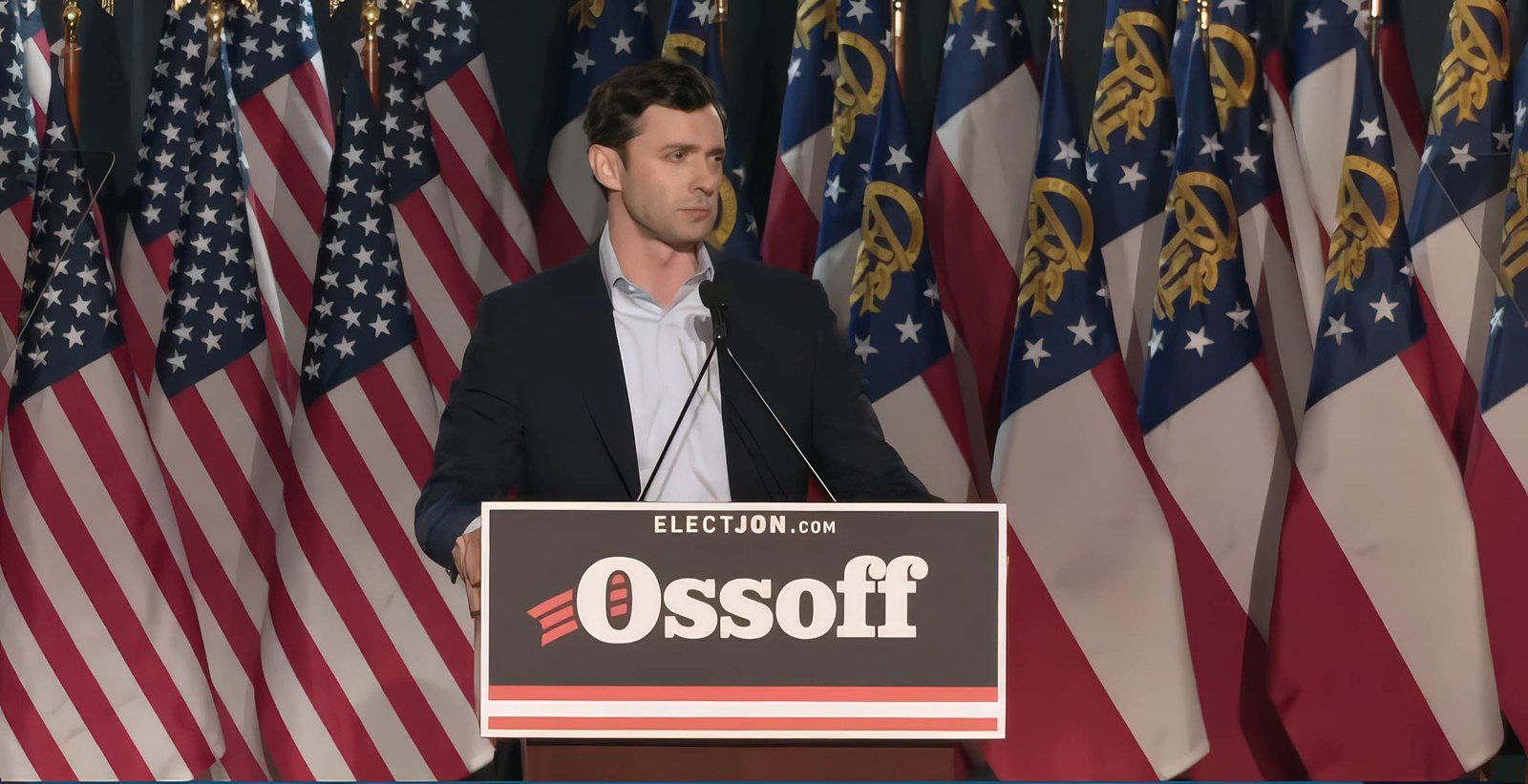
“In sweeping and decisive victories, the American people have rebuked the depravity, corruption, and incompetence of the failed lame duck president, Donald J. Trump. And if at times these past two years, amid the ceaseless onslaught of brutality and indecency, you doubted whether our Republic would survive, let tonight’s results give you courage: that the first light of dawn is on the horizon!
But remember – that our task is not just to contain one president’s wickedness, but to heal the brokenness beneath. That this moment is an opening, not for restoration – but for reformation.
And so, amidst our celebration, we must acknowledge that the underlying crisis gripping our Republic remains, and that therefore our most vital work lies ahead.”
Senator Jon Ossoff, election-night victory speech, Atlanta, 3 November 202614
The suggestion, heard in Australia this week, that America’s electoral landslide heralds a restoration of humanity in Australian politics confuses encouragement with evidence. We can welcome the result without imagining that the social forces behind it have assembled here.
What American voters punished
Consider what American voters did. On 3 November 2026 they gave Democrats the House and the Senate, flipping seven Senate seats,1 with Donald Trump’s approval at 38 per cent and 89 per cent of voters naming the cost of living as a major or crucial factor in their vote.2
The ABC News voter poll found three quarters rating the economy negatively, about two thirds saying Trump’s tariffs had hurt the economy where they live, and 63 per cent blaming his policies for higher prices.3
The Associated Press poll found that swing voters did not embrace the Democrats: roughly two in ten said neither party was better equipped to handle the economy, foreign policy, health care, taxes, or immigration, and more said so of government corruption.4
Voters repudiated a government, and the government earned it. Repudiation and moral transformation are different things.
Voters can punish a government over prices, war, and insecurity without embracing the rights of people whose suffering leaves their own lives largely untouched. Trump remains President until January 2029.
A Democratic Congress can block him, investigate him, and refuse him money. It cannot make Americans, let alone Australians, care about anyone they did not care about on 2 November 2026.
Victoria’s Treaty on the ballot
In Australia the test of humanity’s return has a date: 28 November 2026.


On that day Victorians elect a government. Victoria holds the only treaty an Australian government has ever signed with First Peoples, the Statewide Treaty, which the State and the First Peoples’ Assembly of Victoria signed on 13 November 2025, the day it received royal assent.5
The Liberal–National Coalition has pledged to introduce legislation repealing it within its first hundred days in office and to replace Gellung Warl, the elected First Peoples’ body, with a government department answering to a minister.6
One Nation also backs abolition.7 The Newspoll of 15 to 22 October 2026 gave the Coalition 33 per cent of the primary vote, Labor 24 per cent, and One Nation 20 per cent, with the Coalition leading 55 to 45 after preferences.8
Damon Alexander, a political scientist at Swinburne University, expects Treaty to have no influence on how Victorians vote.9
Abolition sits in the platforms of the parties leading the polls, and the analyst watching the contest expects it to cost them nothing. First Nations rights in Australia can be withdrawn at no electoral price, and the parties withdrawing them know it.
Queensland paid no price
Queensland proved as much two years ago. David Crisafulli campaigned in 2024 on repealing the Path to Treaty Act and closing the Truth-telling and Healing Inquiry.
He won, and on the new Parliament’s first sitting day his government folded the repeal into Olympic Games legislation and passed it late at night.10, 11
No penalty followed. His government leads Queensland polling by a wide margin.8 American voters in 2026 punished a President for the price of petrol. Queensland voters in 2024 punished no one for the price First Nations peoples paid.
What Australian voters forgive
The national ledger shows the same pattern. The Productivity Commission’s 2024 review of the National Agreement on Closing the Gap found that governments had largely not fulfilled their commitments, had failed to grasp the nature and scale of the change required, and had kept control rather than share it.12
Its July 2026 data report, at the agreement’s halfway point, shows one target met, three on track, five improving without being on track, and four going backwards: suicide, adult imprisonment, children in out-of-home care, and early childhood development.13 Governments have presided over those numbers for six years and lost no seats for them.
The borrowed optimism ignores this asymmetry. The American result shows what voters will punish. Australian results show what voters will forgive. Until the second changes, the first says nothing about the prospects of a more humane politics here.
The measure of a humane politics
What would change it is already visible, and none of it comes from abroad. First Nations leadership, community organising, and Victoria’s Treaty demonstrate that change is possible, and demonstrate what it takes: sustained work, political organisation, and concrete commitments that a government cannot quietly shed. An American election supplies none of these on Australia’s behalf.
I would welcome a more humane Australian politics. Its measure must be what happens to people whose rights a government can neglect without losing office.
The next reading of that measure comes on 28 November 2026. If Victoria’s Treaty survives that vote, it will survive because enough Victorians decided its abolition would cost a party their vote, and no one in Washington will have decided it for them. Anyone with energy to spare for celebrating America has three weeks to spend it where a First Nations institution is actually on the ballot.
Until First Nations justice becomes a condition of political legitimacy here, celebrating humanity’s return elsewhere is another way of avoiding responsibility at home.
Sources
1. Northeastern Global News, 2026 midterm election results: Who won the key House and Senate races? 4 November 2026.
2. CBS News, 2026 House midterm election results as Democrats capture majority with major wins. 4 November 2026.
3. ABC News (United States), Repudiation of Trump, economic pain drove Democrats to victory in the House: Voter Poll analysis. 4 November 2026.
4. PBS NewsHour, reporting the Associated Press Voter Poll, How Trump and Republicans lost the 2026 midterm elections, according to AP Voter Poll. 4 November 2026.
5. SBS News, ‘Side by side’: Australia’s first treaty with Aboriginal people signed into law in Victoria. 13 November 2025.
6. ABC News (Australia), Scrapping Victoria’s Treaty would be a ‘devastating’ setback, Aboriginal leaders say. 31 October 2026.
7. ABC News (Australia), The key policies on offer from parties in the 2026 Victorian state election. 4 November 2026.
8. Adrian Beaumont, The Conversation, Coalition surges to big lead in a Victorian Newspoll. 28 October 2026.
9. Australian Associated Press, via Yahoo News Australia, Election clouds future of historic First Peoples treaty. 18 October 2026.
10. Queensland Government, ministerial media statement, A Fresh Start for Queensland: Path to Treaty Act repealed as Indigenous communities receive direct funding boost. 28 November 2024.
11. Dechlan Brennan, National Indigenous Times, Queensland government shuts down truth-telling Inquiry in “extraordinary act”. 28 November 2024.
12. Productivity Commission, Review of the National Agreement on Closing the Gap: Study report. 7 February 2024.
13. Productivity Commission, Closing the Gap Annual Data Compilation Report, July 2026. 29 July 2026.
14. Jon Ossoff for U.S. Senate, Watch: Sen. Ossoff’s victory speech on election night. Atlanta, 3 November 2026.