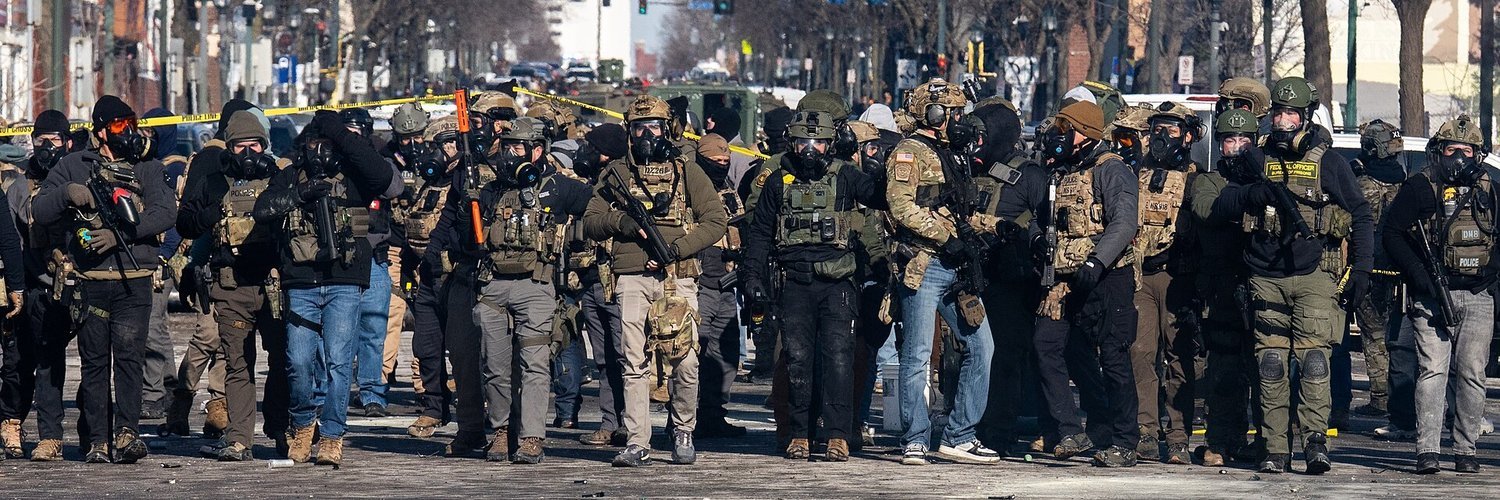

Killed, Jailed, and Disappeared
The Human Record of US Immigration Enforcement, January 2025 to October 2026
The Supreme Court holds that immigration detention is civil and may never punish. Since January 2025 at least sixty people have died in ICE custody, thirty-seven of them in the last fiscal year, the most since the agency began. Federal agents have shot dead American citizens on American streets, and no agent has been charged with any of those killings.
County medical examiners, federal inspectors and federal judges, Trump’s own appointees among them, have recorded the punishment the law forbids.
Daphy Michel was 31, a Haitian asylum seeker with a severe mental illness that no one had treated. The Washington County jail in Pennsylvania held her for six months on misdemeanour charges of terroristic threats and harassment. When a court dismissed the charges, the jail handed her to Immigration and Customs Enforcement (ICE) instead of setting her free. On 27 February 2026, ICE released her into a Pittsburgh winter with an ankle monitor and what her lawyer called “September clothes”. She spent about a day in a bus shelter. She died on 2 March 2026. On 12 June 2026 the Allegheny County Medical Examiner ruled the cause hypothermia and the manner homicide. The examiner described her as “a vulnerable adult, suffering from untreated severe mental health issues and a significant language barrier” 123.
No court had convicted her of anything, and no court could have convicted her for being in the country. No prosecutor has charged anyone over her death. Because she died after ICE released her, her name appears nowhere in ICE’s count of deaths in custody.
The United States tells its courts that immigration detention is civil, a holding measure to make sure people attend their hearings, and that it may never serve as punishment. Public officials’ own records tell a different story: ICE’s death notices, federal inspectors’ reports, the findings of county medical examiners, and the rulings of federal judges, several of them appointed by the present President. Those records describe punishment, sometimes fatal, inflicted on people whom no court has tried or sentenced. To tell the courts one thing and do another is hypocrisy. When the toll includes deaths that ordinary medical care could have prevented, it is a grave and continuing injustice, and the government that commits it owes the dead an accounting.
What US Law Promises the People It Detains
On one premise the Court has spoken plainly. In Arizona v. United States in 2012, Justice Anthony Kennedy wrote for the Supreme Court: “As a general rule, it is not a crime for a removable alien to remain present in the United States.” He added: “Removal is a civil, not criminal, matter” 4. Crossing the border without inspection is a separate federal misdemeanour, but most people in ICE detention face a civil question under civil law: whether they may stay.
The Court has also set limits on civil detention. In Zadvydas v. Davis in 2001 it wrote: “The proceedings at issue here are civil, not criminal, and we assume that they are nonpunitive in purpose and effect.” It recalled Wong Wing v. United States, an 1896 case in which it struck down a law that imprisoned Chinese people found unlawfully in the country at hard labour for up to a year, without a jury trial, before removing them. Punishment of that kind, the Court held, required a criminal trial, because “all persons within the territory of the United States are entitled to the protection” of the Constitution 5.
The Court has even supplied a test for telling punishment from administration. In Bell v. Wolfish in 1979, a case about people jailed while they awaited trial, it held that when a condition of detention “is not reasonably related to a legitimate goal” and is “arbitrary or purposeless”, a court may infer that its purpose is punishment, which “may not constitutionally be inflicted upon detainees qua detainees” 6. Denying insulin to a diabetic does nothing to bring him to his hearing. Neither does ignoring an infection for weeks, or confining a man in a cage as discipline. Under the Court’s test, conditions like these invite the inference of punishment, and where officials know of the danger and do nothing, courts call it deliberate indifference.
The Court has gone further still. In Youngberg v. Romeo in 1982 it held: “Persons who have been involuntarily committed are entitled to more considerate treatment and conditions of confinement than criminals whose conditions of confinement are designed to punish” 7. Several federal appeals courts have applied that reasoning to other civil detainees: a person held for a civil purpose is owed better treatment than a convicted prisoner receives.
Custody also brings a duty of care. A locked-up person can no longer fetch their own insulin, see their own dentist or leave a cold room. In DeShaney v. Winnebago County in 1989, a judgment that denied any remedy to a small boy beaten by his father, the Court still affirmed the principle: “when the State takes a person into its custody and holds him there against his will, the Constitution imposes upon it a corresponding duty to assume some responsibility for his safety and general well-being” 8.
These are the government’s own terms: detention may not punish, and custody brings a duty of care. Measure the record against them.
A Record Death Toll, and a Rising Death Rate
Thirty-seven people died in ICE custody in the fiscal year that ended on 30 September 2026, the highest annual total since the agency’s founding in 2003 9. The previous record, 28 deaths in fiscal 2004, fell by mid-April 2026 10. Since January 2025 at least sixty people have died in ICE custody, by the count of Relevant Research, a group that tracks detainee deaths. The sixtieth, Emiliano Andrade-Covarrubias, 56, a lawful permanent resident from Dallas, died at the Rio Grande Processing Center in Laredo, Texas, on 17 October 2026. His daughter, Estefani Andrade, says staff would not give him the medications he had brought with him 1112.
Defenders of the system answer that ICE now detains far more people, and it does: about 73,000 in mid-January 2026, the first time the population had passed 70,000 13. Human Rights Watch therefore measured the death rate as well as the count. It found the mortality rate in ICE custody about 140 per cent higher in the year from January 2025 to January 2026 than in the year before, while the detained population rose by 77 per cent 14. Deaths have outrun the growth in detention. Each person ICE holds now faces a greater risk of dying in its hands.
Independent physicians who reviewed the deaths in ICE detention from 2017 to 2021 judged 95 per cent of them preventable or possibly preventable 15. The suicides follow the same course. An Associated Press investigation found at least ten suicides in ICE custody between January 2025 and May 2026, seven of them in fiscal 2026 alone, already a record. Seven of the ten had no record of violent crime 16.
Agents Shoot, Officials Blame the Dead, and No One Is Charged
Deaths in custody come slowly. Killings on the street come in seconds, and they follow a pattern. An agent shoots someone. Within hours the Department of Homeland Security (DHS) says the victim attacked the agent, usually with a car. Then the evidence arrives: video, an autopsy, a body-camera recording. The evidence contradicts the department, and still no prosecutor charges the agent with the killing.

On 7 January 2026 an ICE officer, Jonathan Ross, shot Renee Good as she sat at the wheel of her SUV in Minneapolis. She was 37, a US citizen, a poet and a mother of three. Kristi Noem, then Secretary of Homeland Security, called the shooting “an act of domestic terrorism” and said Good had tried to “weaponize her vehicle”. Cellphone video appears to show her turning the wheel away from Ross before she drove away. An autopsy commissioned by her family found three gunshot wounds and a graze, one through the left side of her head 1718. The FBI took sole control of the investigation, and Minnesota’s state investigators withdrew. Minnesota had to sue to obtain the evidence, which arrived in July 2026; the Hennepin County Attorney is still reviewing it. No prosecutor has charged anyone. On 1 October 2026 her family sued the United States for wrongful death, and sued Ross and senior officials under the Ku Klux Klan Act of 1871, among them Noem; Stephen Miller, the White House deputy chief of staff; Tom Homan, the President’s border adviser; and Corey Lewandowski, Noem’s former senior adviser 19.

Seventeen days later, in the same city, federal agents killed Alex Pretti, 37, an intensive care nurse at the Minneapolis VA Medical Center and a US citizen. He was filming an enforcement operation. Video appears to show agents spraying him, forcing him to the ground and taking the handgun he carried under permit before two of them opened fire. Noem called his conduct “domestic terrorism” 20. The Hennepin County Medical Examiner ruled his death a homicide 21. ProPublica later identified the two men who fired as Border Patrol agent Jesus Ochoa and Customs and Border Protection officer Raymundo Gutierrez. CBP placed both on leave 22.
On 12 September 2025 an ICE agent shot Silverio Villegas González, a 38-year-old line cook, in Franklin Park, Illinois, minutes after he had dropped his children at school. DHS said he had dragged an officer “a significant distance”. Body-camera footage obtained by the Chicago Sun-Times shows the officer calling his own injuries “nothing major” 23. The coroner found that he had been shot from behind at close range, downward through the back of his neck 24. DHS says federal prosecutors declined to charge the agent; an Illinois State Police investigation remains open.
In Chicago in October 2025, Border Patrol agent Charles Exum shot Marimar Martinez, a US citizen, five times. The government charged her with assaulting an officer and charged him with nothing. On 20 November 2025 a federal judge dismissed the case against her with prejudice, at the government’s own request 25. A forensic reconstruction commissioned for her lawsuit alleges that Exum fired from outside her car’s path 26.
The pattern began early. On 15 March 2025, at a crash scene on South Padre Island, Texas, a Homeland Security Investigations agent, Jack Stevens, fired three shots into a car and killed Ruben Ray Martinez, 23, a US citizen. ICE’s report says the car struck an agent, who ended up on its hood 27. The public learned of ICE’s involvement only in February 2026, eleven months later, through records obtained by the watchdog group American Oversight. Video released by the Texas Department of Public Safety, including a local police officer’s body-camera footage, cast doubt on DHS’s account, and the family’s lawyer says the car was braking 28. On 25 February 2026 the grand jury declined to indict 29.
The killings continued. On 7 July 2026 an ICE officer shot and killed Lorenzo Salgado Araujo, 52, as he drove his construction crew in Houston. The officers had come to arrest someone else, and they wore no body cameras 3031. Six days later in Biddeford, Maine, an ICE officer shot and killed Johan Sebastián Durán Guerrero, 25. The warrant named another man, and his family’s lawyer says no one had ever accused him of a crime 32.
Each killing, taken alone, can be described as a tragic split-second judgement. Taken together, they form a pattern: the accusation comes first, the contrary evidence later, and the outcome never varies. No agent has faced a criminal charge for any of these killings. When the same sequence recurs in case after case, the structure of the system explains it better than chance or any one agent’s split-second judgement does.
How the System Shields Agents From Prosecution
That structure has identifiable parts. Federal investigators take over the cases and shut out state ones, as the FBI did after Renee Good’s death. Many officers wear no body cameras. When a state does charge an agent, the agent can find refuge: in May 2026 the Hennepin County Attorney charged an ICE agent with assault over a non-fatal shooting in Minneapolis, Texas has refused to extradite him, and in August 2026 a federal judge declined to make it 33. Federal officers can claim immunity from state prosecution for acts within their federal duties, a doctrine the Supreme Court recognised in 1890 34. And in Egbert v. Boule in 2022, the Supreme Court all but closed the main road by which victims once sued federal agents for damages under the Constitution, ruling that a man injured by a Border Patrol agent had no such claim 35. That ruling explains why Renee Good’s family, besides suing the United States, has reached back to the Ku Klux Klan Act, a statute Congress passed in 1871 to stop the Klan’s terror against Black citizens. A law written against the night riders of Reconstruction now offers one of the few routes to holding federal officials personally liable.
Deaths From Illnesses Any Clinic Could Treat
Most of the people who died in custody died of illnesses that prompt medical care can treat.
Ismael Ayala-Uribe came to the United States at the age of four and once held protection under the Deferred Action for Childhood Arrivals (DACA) program. At the Adelanto ICE Processing Center in California, run by the private prison company GEO Group, he reported fever and pain on 18 September 2025, and staff returned him to his cell with over-the-counter pain pills. Three days passed before they sent him to hospital. He died on 22 September 2025, aged 39, 37 days into his detention. His parents’ lawsuit says a serious infection had progressed to sepsis 36. Conditions at Adelanto grew bad enough that on 16 July 2026 US District Judge Sunshine Sykes ordered the government to give the people held there 24-hour access to clean drinking water and adequate medical care 37. A federal court had to order the United States government to give the people it detains clean water.
Carlos Josué Marchena-Marchena, 36, from Costa Rica, had type 1 diabetes. His sister says that at Winn Correctional Center in Louisiana he missed insulin and meals. His girlfriend says that for chest pain, “All they gave him was a pill”. Guards found him unresponsive on 18 September 2026 38. Edwin Jovanny López Cornejo, 41 by ICE’s account, had diabetes, hypertension and epilepsy and had lived in the United States for more than twenty years. His family says that at Delaney Hall in Newark he received his medication “when they wanted, not when he needed them.” The day before he collapsed, he said he could not feel half his face or his right hand. He died on 1 August 2026 39. Fouad Saeed Abdulkadir, 46, an imam from northeast Ohio, asked a federal court on 11 December 2025 for emergency release to obtain medical care. The judge denied the request that day. Three days later he died at the Moshannon Valley Processing Center in Pennsylvania after complaining, by ICE’s own account, of chest pains 40.
Emmanuel Clifford Damas, 56, was a Haitian man arrested in Boston. CoreCivic, a private prison company, held him in Florence, Arizona. His family says he complained of a toothache in mid-February 2026. A helicopter took him to hospital on 19 February 2026, and he died on 2 March 2026. The Maricopa County Medical Examiner found that an infection from a neck abscess, “in the setting of severe dental caries and periodontal disease”, had spread into his chest 41. The examiner’s record also shows that he declined tooth extractions in October 2025 and January 2026, and refused an evaluation the day before he went to hospital 42. Staff therefore knew of his dental disease for at least four months before it killed him.
The official record offers other explanations in some deaths. The El Paso County Medical Examiner ruled the first death at Camp East Montana, that of Francisco Gaspar-Andrés, a Guatemalan man, natural, from cirrhosis of the liver 43. ICE says Parady La, a refugee who arrived in Philadelphia in the 1980s, was in severe drug withdrawal when officers found him unresponsive the day after his arrest 44.
A natural death in custody remains a death in custody. Withdrawal is a medical emergency, and any competent jail screens for it. A dental infection that kills gives months of warning, and a patient who refuses one treatment still needs another. The state that holds a person against their will takes responsibility for their safety and wellbeing. When a person dies in custody of a condition medicine can treat, the question becomes why no one treated it.
Some deaths in custody admit no natural explanation at all. Geraldo Lunas Campos, 55, a Cuban man who had lived in the United States since 1996, was held at Camp East Montana because Cuba would not issue him travel documents. ICE had held him since July 2025. He had bipolar disorder, and staff had found him with a sheet around his neck three months before he died on 3 January 2026 45. ICE first reported “medical distress”, then a suicide attempt, then death after staff’s “spontaneous use of force”. On 21 January 2026 the El Paso County Medical Examiner ruled his death a homicide by “asphyxia due to neck and torso compression”. Six detainees told a federal court that he begged for his asthma medication, and one said a guard choked him until he lost consciousness 4647. He had criminal convictions from 2003 and 2009. Those convictions belong in the record. They did nothing to lessen the state’s duty to keep him alive.

What Inspectors Found, and What ICE Concealed
ICE has kept much of its record from public view.
Federal policy requires ICE to post a public notice within 48 hours of a death in custody. In April 2026 two Democratic senators from Georgia, Jon Ossoff and Raphael Warnock, reported that ICE had met that requirement in only 15 of 49 deaths 10. Questioned in Congress on 16 April 2026, the acting director of ICE, Todd Lyons, answered only: “We are reporting. We are working on that timeline.” Later that day he announced that he would resign at the end of May 2026 48.
According to KPRC, a Houston television station, ICE sent the next body from Camp East Montana to an Army hospital instead of the El Paso County Medical Examiner, whose office later ruled the earlier death a homicide. Staff found Victor Manuel Diaz, 36, a Nicaraguan man, with a ligature on 14 January 2026 after hours in a medical holding room. ICE reported a presumed suicide and sent his body to William Beaumont Army Medical Center, which releases autopsies only to families and investigators 49. His brother says: “I don’t believe he took his life” 50.
Staff found Chaofeng Ge, 32, a Mandarin speaker held by GEO Group at Moshannon Valley in Pennsylvania, hanged in a shower stall on 5 August 2025, four days after he entered custody. The coroner’s autopsy ruled his death a suicide and recorded that he was found “with his hands and feet tied behind his back” 51. ICE’s death report made no mention of the bindings 52. Royer Pérez-Jiménez, 19, the youngest person to die in ICE custody under this administration, died at the Glades County jail in Florida on 16 March 2026. ICE reported a presumed suicide and said he faced felony charges in Volusia County, but the Volusia County sheriff’s office says he does not appear in its system 53.
The Government Accountability Office, the investigative arm of Congress, examined Camp East Montana, the tent camp at Fort Bliss in El Paso that serves as ICE’s largest facility. It found that the camp opened before construction had finished, that evidence in one death was “missing or destroyed”, and that a detainee with tuberculosis was housed with the general population after the contractor screened people by questionnaire instead of the required skin test. Under a $1.3 billion contract, the Army wasted up to $11.5 million in the first two weeks, before any detainee arrived, and ICE paid millions more for meals it did not need. At the end of February 2026 the camp held about 1,600 people, and the government was paying to hold 5,000 54. Human Rights Watch and the American Civil Liberties Union interviewed 80 people about conditions there. They titled their report with what guards told one detainee: “You’re only getting out deported or dead” 55.
The DHS Office of Inspector General found that at Alligator Alcatraz, a detention camp Florida built and ran in the Everglades for ICE detainees until it closed in June 2026, staff held 79 people in metal enclosures of about 18 square feet, for up to nearly two hours, and in at least one instance may have used the enclosures as discipline. The inspectors found that the practice “does not meet standards for humane treatment” 56.

What Federal Judges Have Found, Trump’s Appointees Among Them
Federal judges heard sworn testimony, watched the video, and made findings.
In Chicago, US District Judge Sara Ellis reviewed hundreds of hours of footage. On 7 November 2025 she found that agents’ “use of force shocks the conscience”, and that the Border Patrol commander, Gregory Bovino, had admitted lying about being hit by a rock before he ordered tear gas 57. At the Broadview processing centre outside Chicago, US District Judge Robert Gettleman said from the bench that the facility “has really become a prison”, and he ordered changes to sleeping conditions he found unnecessarily cruel 58. In Manhattan, on 24 September 2026, US District Judge Lewis Kaplan found that ICE had complied with his orders on its holding rooms at 26 Federal Plaza “only when convenient for them”. He found that ICE imposed the conditions there “to inflict punishment on detainees and induce them to self-deport”, and he issued a permanent injunction requiring sanitation, meals, medical care and free calls to lawyers 59. A federal judge has found, in so many words, that ICE uses detention to punish.
Some of the sharpest findings come from judges whom Donald Trump appointed. In Alabama, on 21 September 2026, Chief Judge Jeffrey Beaverstock temporarily halted warrantless immigration raids on private construction sites. Leonardo Garcia Venegas, a US-born construction worker whom agents had twice detained, brought the case; on the second occasion they told him his valid Alabama REAL ID was fake 6061. On Long Island, on 6 October 2026, Judge Gary R. Brown found that ICE agents gave “evasive and apparently perjurious” testimony and fabricated a warrant after the fact to justify a wrong-identity arrest in the Bronx. “ICE agents falsified official records trying to conceal their illegal actions,” he wrote, “which included significant injury to a U.S. citizen” 62. The President chose these judges himself.
American Citizens Held, Beaten and Deported
The record denies American citizens the comfort of supposing that all this happens to other people.
ProPublica documented 506 US citizens held by immigration agents between January 2025 and September 2026, at least 70 of them children and teenagers. Agents deported roughly a dozen citizens, most of them children. Agents held more than 100 after questioning their citizenship, and nearly all of those were people of colour. Of the more than 300 citizens detained on accusations of assault or obstruction, prosecutors charged fewer than half in federal court, and at least 63 were detained while recording agents. The government keeps no count of its own 63.
George Retes, an Iraq War veteran working as a security guard, told agents at a roadblock that he was a citizen. They broke his driver’s-side window and pepper-sprayed him; one agent knelt on his neck and another on his back. They held him for more than 72 hours without charges, a hearing or access to a lawyer. No one ever charged him with anything 64. Agents held Brian Morales Garcia, born in Denver, for days and deported him to Mexico on 7 April 2026. The Justice Department let him re-enter on 30 August 2026, and DHS still disputes his citizenship 65. In April 2025 ICE deported a two-year-old American girl with her mother before a judge could rule. Judge Terry Doughty, a Trump appointee on the federal bench in Louisiana, wrote of a “strong suspicion that the Government just deported a U.S. citizen with no meaningful process” 66. The government said the mother had asked to take her daughter with her.
The Supreme Court made such abuses easier. In September 2025, in Noem v. Vasquez Perdomo, it stayed a Los Angeles order that had barred agents from stopping people based solely on apparent ethnicity, speaking Spanish or accented English, presence at places such as car washes and bus stops, or type of work, alone or in combination. Justice Brett Kavanaugh wrote that ethnicity can be “a ‘relevant factor’ when considered along with other salient factors.” Justice Sonia Sotomayor, joined by Justices Elena Kagan and Ketanji Brown Jackson, answered him: “We should not have to live in a country where the Government can seize anyone who looks Latino, speaks Spanish, and appears to work a low wage job” 67. Enforcement that begins with how a person looks cannot stop at citizenship, because no one can see citizenship.
Is “Concentration Camp” the Right Word?
Many writers call these places concentration camps, and many readers recoil from the term. The word deserves use only with a definition.
The historian Andrea Pitzer, author of One Long Night, a global history of such camps, defines them as “mass civilian detention without real trials targeting vulnerable groups for political gain”, with people chosen for their ethnicity, race, religion or politics “rather than for crimes committed”. She distinguishes them from extermination camps, and in July 2025 she applied the term to Alligator Alcatraz 68. On that definition the question becomes one of fact. Does the United States hold civilians in large numbers? Yes: more than 70,000 at the peak. Without real trials? Detainees face immigration judges who work for the Justice Department, most of them without a lawyer, and no jury ever hears their cases 69. Chosen by ethnicity rather than for crimes committed? At the stops where detention often begins, Justice Kavanaugh wrote that apparent ethnicity may count, the Court let the stops resume, and nearly all the citizens whom agents held after questioning their citizenship were people of colour. For political gain? On 1 July 2025 the President toured Alligator Alcatraz before the cameras. On Pitzer’s definition, the camps qualify.
The United States has done this before and has said so. During the Second World War it incarcerated about 120,000 people of Japanese ancestry, most of them American citizens. In 1988 President Ronald Reagan signed the Civil Liberties Act, which apologised to them and paid each survivor $20,000. Camp East Montana stands on Fort Bliss, where in 1942 the Army ran a detention station for enemy aliens, mostly men of Japanese, German and Italian descent 7071. The country has detained civilians on this ground before. It later apologised to the Japanese Americans it confined, though never to the German and Italian nationals held here.


The record stops short of death camps, and so does my claim. My claim is narrower and harder to escape. The United States now holds tens of thousands of civilians without trial in conditions that its own judges call cruel, and its own inspectors have found people held in small metal cages. They die there at a rising rate, and no one answers for their deaths.
Australia’s High Court Drew the Same Line
I write as an American who lives in Australia. Australia’s own record of immigration detention is harsh, yet its High Court has drawn, in Australian law, the line that the US Supreme Court drew in Wong Wing.
In Australia, the High Court set the rule in 1992. In Chu Kheng Lim v Minister for Immigration, a case brought by Cambodian asylum seekers held in Australian detention, it held that the Australian government may detain a non-citizen only so far as detention is “reasonably capable of being seen as necessary” to deport them or to decide their application. Beyond that limit, the Court held, detention becomes punishment, and in Australia only a court may punish 72.
The same Australian court then retreated. In Al-Kateb v Godwin in 2004, it upheld the indefinite detention of a stateless man whom Australia could not deport. Nineteen years later it reversed itself. In NZYQ in 2023, the case of a stateless Rohingya man known only by that pseudonym, a unanimous High Court overruled Al-Kateb and held detention unlawful where the government has no real prospect of removing the person. About 150 people left Australian immigration detention within months 73.
In the United States, the Supreme Court holds the same principle. In Zadvydas v. Davis in 2001, it presumed detention unreasonable after six months once removal is no longer reasonably foreseeable 5. Geraldo Lunas Campos stood in exactly that position: ICE held him at Camp East Montana because Cuba would not take him back, and he died in its custody about six months after ICE detained him.
In both countries, the principle protects only the people whose cases reach a court in time.
A Country Judged by Its Treatment of the Powerless
A country is judged by what it does to people who cannot vote, cannot hire a lawyer and cannot leave. The United States has written down, in its own courts, that detention may not punish and that custody brings a duty of care. Its own medical examiners, inspectors and judges have now recorded what it does in place of those promises. That conduct is wrong in law and wrong in morals. It inflicts suffering on people whom no court has judged, and it lies to the courts about what it does.
Defenders of the system will call these isolated failures. They will point to the criminal records of some of the dead, and they will say the agents feared for their lives. The evidence has answered each claim: the video, the autopsies, the coroner’s finding of a shot from behind, the bindings left out of ICE’s report, the 15 notices out of 49. A failure that repeats for nearly two years has become the way the system works.
What to do next
- Free a detained person through a community bond fund. Immigration bonds start at $1,500 and must be paid in full, in cash. The National Bail Fund Network lists about thirty funds that pay them, among them the Envision Freedom Fund in New York, which has freed more than 1,300 people 7475.
- Fund a lawyer for someone in detention. In a national study, detained immigrants with counsel won release from custody four times as often as those without, yet only 14 per cent had a lawyer 69. Give to a local deportation-defence provider, or press your city or county to join the Vera Institute’s SAFE Network, which publicly funds representation 76.
- Answer calls on the National Immigration Detention Hotline. Freedom for Immigrants runs the free hotline for people in detention and connects volunteers with local visitation groups 77.
- Back state oversight with powers of entry. California has made state inspections of detention facilities permanent and enacted a civil detainees’ bill of rights; Washington won a court order admitting state health inspectors to the Tacoma detention centre 7879. Press your own legislature for the same powers, and for a law that sends every death in ICE custody to an independent county medical examiner.
- Train as a legal observer before you film agents. The National Lawyers Guild trains observers through its local chapters 80. ProPublica found that agents detained at least 63 citizens who were recording them.
Their Names
The system works to erase the dead. Their names close the record, each with the little the public record has kept of a life.
- 15 March 2025Ruben Ray Martinez23, a US citizenShot by a Homeland Security Investigations agent, South Padre Island, Texas
- 5 August 2025Chaofeng Ge32, from ChinaDied in ICE custody, Moshannon Valley, Pennsylvania
- 12 September 2025Silverio Villegas González38, a line cook and fatherShot by an ICE agent, Franklin Park, Illinois
- 22 September 2025Ismael Ayala‑Uribe39, brought to the United States at the age of fourDied in ICE custody, Adelanto, California
- December 2025Francisco Gaspar‑Andrés48, from GuatemalaDied in ICE custody, Camp East Montana, El Paso, Texas
- 14 December 2025Fouad Saeed Abdulkadir46, an imam from OhioDied in ICE custody, Moshannon Valley, Pennsylvania
- 3 January 2026Geraldo Lunas Campos55, from Cuba, in the United States since 1996Died in ICE custody, Camp East Montana, El Paso, Texas. Ruled a homicide
- 7 January 2026Renee Good37, a poet and mother of three, a US citizenShot by an ICE officer, Minneapolis
- 9 January 2026Parady La46, of PhiladelphiaDied in ICE custody, Philadelphia
- 14 January 2026Victor Manuel Diaz36, from NicaraguaDied in ICE custody, Camp East Montana, El Paso, Texas
- 24 January 2026Alex Pretti37, an intensive care nurse, a US citizenShot by federal agents, Minneapolis. Ruled a homicide
- 2 March 2026Emmanuel Damas56, from HaitiDied in ICE custody, Florence, Arizona
- 2 March 2026Daphy Michel31, an asylum seeker from HaitiDied of cold days after ICE released her, Pittsburgh. Ruled a homicide
- 16 March 2026Royer Pérez‑Jiménez19, from MexicoDied in ICE custody, Moore Haven, Florida
- 7 July 2026Lorenzo Salgado Araujo52, a builder, driving his crew to workShot by an ICE officer, Houston
- 13 July 2026Johan Sebastián Durán Guerrero25, a fatherShot by an ICE officer, Biddeford, Maine
- 1 August 2026Edwin López Cornejo41, in the United States more than twenty yearsDied in ICE custody, Newark, New Jersey
- 18 September 2026Carlos Marchena‑Marchena36, from Costa RicaDied in ICE custody, Winnfield, Louisiana
- 17 October 2026Emiliano Andrade‑Covarrubias56, a lawful permanent resident of DallasDied in ICE custody, Laredo, Texas, the sixtieth death since January 2025
At least sixty people have died in ICE custody since January 2025. The Case Record sets out each named case in full.
No court sentenced any of them to die. Each died at the hands of American immigration enforcement, in its custody, or days after it turned them out, and the government calls all of it administration.
Notes
1. CBS News Pittsburgh, Death of Haitian woman released from ICE custody in Pittsburgh ruled a homicide, June 2026.
2. PublicSource, Report on the medical examiner’s homicide ruling in the death of Daphy Michel, June 2026.
3. Courthouse News Service, A woman’s hypothermia death in Pittsburgh after her release from ICE custody is ruled a homicide, June 2026.
4. Supreme Court of the United States, via Legal Information Institute, Arizona v. United States, 567 U.S. 387 (2012).
5. Supreme Court of the United States, via Legal Information Institute, Zadvydas v. Davis, 533 U.S. 678 (2001).
6. Supreme Court of the United States, via Legal Information Institute, Bell v. Wolfish, 441 U.S. 520 (1979), at 539.
7. Supreme Court of the United States, via Legal Information Institute, Youngberg v. Romeo, 457 U.S. 307 (1982), at 321–322.
8. Supreme Court of the United States, via Legal Information Institute, DeShaney v. Winnebago County Department of Social Services, 489 U.S. 189 (1989), at 199–200.
9. Bloomberg Law, Immigrant Deaths in ICE Custody Nearly Double as Oversight Wanes, 30 September 2026.
10. NPR, Deaths of migrants in ICE custody hit record high under Trump, 17 April 2026.
11. Texas Tribune, Migrant found dead at Laredo Processing Center run by ICE, 18 October 2026.
12. Scripps News, ICE detainee found dead in private lockup was a legal permanent resident, 20 October 2026.
13. CBS News, ICE’s detainee population reaches new record high of 73,000, as crackdown widens, 16 January 2026.
14. Human Rights Watch, Dying in Detention: Rising Deaths in an Expanding US Immigration Detention System, 25 June 2026.
15. ACLU, American Oversight and Physicians for Human Rights, Deadly Failures: Preventable Deaths in U.S. Immigrant Detention, June 2024.
16. Associated Press, via WTOP, Takeaways from AP investigation that found ‘alarming’ spike in suicide deaths of ICE detainees, May 2026.
17. NBC News, Renee Good was shot in the head, autopsy commissioned by her family finds, January 2026.
18. OPB, The family of Renee Good files lawsuits over her death during Minneapolis ICE raids, 2 October 2026.
19. Reuters, via Galveston County Daily News, Renee Good’s family sues US, ICE officers over fatal shooting, 1 October 2026.
20. MPR News, The fatal shooting of Alex Pretti.
21. MPR News, Medical examiner issues initial, public report on death of Alex Pretti, 2 February 2026.
22. ProPublica, Two CBP Agents Identified in Alex Pretti Shooting, 2026.
23. Chicago Sun-Times, Family of Silverio Villegas González seeks damages over fatal ICE shooting near Chicago, 8 October 2026.
24. Associated Press, via US News & World Report, Family of Mexican father shot dead by ICE in Chicago files claim over unlawful shooting, 8 October 2026.
25. ABC News, Judge dismisses charges against 2 people accused of ramming vehicle of federal agents conducting Chicago immigration sweeps, 20 November 2025.
26. Chicago Sun-Times, Chicago woman shot by Border Patrol sues feds — and keeps pushing for criminal charges, 5 October 2026.
27. CNN, Ruben Ray Martinez: Texas man was fatally shot by a federal immigration agent last year, new records show, 20 February 2026.
28. ABC News, Video footage appears to cast doubt on DHS claims about fatal 2025 shooting involving agent, 2026.
29. Texas Public Radio, Texas grand jury won’t indict in 2025 fatal shooting of U.S. citizen by ICE agent, 25 February 2026.
30. The Atlantic, Report on the killing of Lorenzo Salgado Araujo in Houston, July 2026.
31. BBC News, Texas will investigate fatal ICE shooting of Lorenzo Salgado Araujo, July 2026.
32. USA Today, Report on the family of Johan Sebastián Durán Guerrero after the Biddeford shooting, 17 July 2026.
33. FOX 9, ICE shootings: Where do Minnesota’s criminal investigations stand?, 20 August 2026.
34. Supreme Court of the United States, via Justia, In re Neagle, 135 U.S. 1 (1890).
35. Supreme Court of the United States, via Legal Information Institute, Egbert v. Boule, 596 U.S. 482 (2022).
36. Orange County Register, Family of Orange County man who died in ICE detention sues prison operator, 4 January 2026.
37. LAist, Judge demands immigrants at Adelanto get clean water and medical care, July 2026.
38. Atlanta Journal-Constitution, Costa Rican man complained of lack of care for diabetes before his death in ICE custody, family says, September 2026.
39. Documented, Report on the death of Edwin Jovanny López Cornejo at Delaney Hall, 4 August 2026.
40. AOL, Religious Leader Dies In ICE Custody At PA Facility Days After Filing Emergency Lawsuit, December 2025.
41. KOLD News 13, Infected tooth led to death of man in ICE custody in Arizona, medical examiner says, 14 May 2026.
42. AZFamily, Medical Examiner report traces timeline of ICE detainee’s care in Arizona before death, 20 May 2026.
43. KVIA, Autopsy reveals first Camp East Montana fatality died of natural causes, 21 January 2026.
44. FOX 29 Philadelphia, Family, ACLU demand transparency after Cambodian American man dies in ICE custody in Philadelphia, January 2026.
45. ProPublica, “He Didn’t Need to Die.” How an Immigration Detention Center Repeatedly Failed to Address a Mental Health Crisis., 2026.
46. NBC News, ICE detainee’s death ruled a homicide by medical examiner, January 2026.
47. Texas Tribune, Report on the use of force in the death of Geraldo Lunas Campos at Camp East Montana, 20 February 2026.
48. Associated Press, via OPB, Todd Lyons will resign as acting director of ICE, 16 April 2026.
49. KPRC 2 Houston, After El Paso’s ME ruled migrant’s death a homicide, ICE sent the next body to an Army hospital, 3 February 2026.
50. ABC7, Family of Nicaraguan man seeks answers after his death in ICE detention facility, 2026.
51. Scripps News, Autopsy raises questions about death at private ICE detention center, 2025.
52. Documented, Report on the death of Chaofeng Ge at Moshannon Valley, 13 November 2025.
53. Associated Press, via WUSF, A Mexican teen migrant dies in Glades County facility holding ICE detainees, 20 March 2026.
54. US Government Accountability Office, Immigration Detention: Waste and Performance Issues at Camp East Montana Provide Valuable Lessons for Future Facilities (GAO-26-108886), 9 June 2026.
55. Human Rights Watch and ACLU, “You’re Only Getting Out Deported or Dead”: Abusive US Immigration Detention at Ft. Bliss, 15 July 2026.
56. Associated Press, via WUSF, ‘Alligator Alcatraz’ detainees were held in small metal cages, federal report says, 14 September 2026.
57. JURIST, US federal judge restricts ICE use of force in Chicago, November 2025.
58. WTTW News, Federal judge orders Broadview ICE detention center to improve conditions, access to food, 5 November 2025.
59. Courthouse News Service, In final ruling against ICE, judge blasts dreadful and squalid conditions at 26 Federal Plaza, 24 September 2026.
60. Bisnow, Judge: Immigration Raids On Construction Sites Need Warrants, September 2026.
61. PBS NewsHour, U.S. citizen wrongfully detained twice in Alabama workplace raids sues immigration authorities, 2026.
62. New York Daily News, Federal judge blasts ICE agents for false testimony, bogus warrant, in wrong-ID Bronx arrests, 6 October 2026.
63. ProPublica, More Than 500 U.S. Citizens Have Been Detained, Including Handcuffed or Held at Gunpoint, in Trump’s Immigration Crackdown, updated 6 October 2026.
64. Institute for Justice, George Retes: federal officer accountability.
65. Texas Tribune, Report on the return of Brian Morales Garcia, a US citizen deported to Mexico, 30 August 2026.
66. ABC7, 2-year-old US citizen deported ‘with no meaningful process,’ judge suspects, April 2025.
67. Supreme Court of the United States, Noem v. Vasquez Perdomo, No. 25A169, order and opinions of 8 September 2025.
68. MSNBC, Don’t call it ‘Alligator Alcatraz.’ Call it a concentration camp., July 2025.
69. American Immigration Council, Access to Counsel in Immigration Court, 28 September 2016.
70. El Paso Matters, Fact check: Fort Bliss internment camp held Japanese, Italian and German detainees, 10 September 2025.
71. Texas Historical Commission, Alien Enemy Detention in Texas (brochure).
72. High Court of Australia, via NZYQ judgment, Wikisource, NZYQ v Minister for Immigration, Citizenship and Multicultural Affairs [2023] HCA 37, quoting Chu Kheng Lim v Minister for Immigration (1992) 176 CLR 1 at 33.
73. University of Melbourne, Peter McMullin Centre on Statelessness, NZYQ v Minister for Immigration, Citizenship and Multicultural Affairs, case summary.
74. Community Justice Exchange, National Bail Fund Network, Directory of Immigration System Bail Funds.
75. The Progressive, Building Bonds, 10 August 2026.
76. Vera Institute of Justice, Rising to the Moment: Advancing the National Movement for Universal Representation.
77. Freedom for Immigrants, National Immigration Detention Hotline.
78. California Attorney General, Attorney General Bonta’s Sponsored Bills to Protect the Rights of California’s Immigrants Signed into Law, 29 September 2026.
79. Courthouse News Service, Judge says health inspectors must be admitted into Washington ICE lockup, July 2026.
80. National Lawyers Guild, Legal Observer program.
Published 22 October 2026 at philippefoubert.com as the second of the Letters to America. Photographs marked CC BY 4.0 appear under that licence; all others are US government works in the public domain. © Philippe Foubert 2026.