Queensland’s Bail Bill Breaches Human Rights. A Committee Agrees, and Says Pass It Anyway
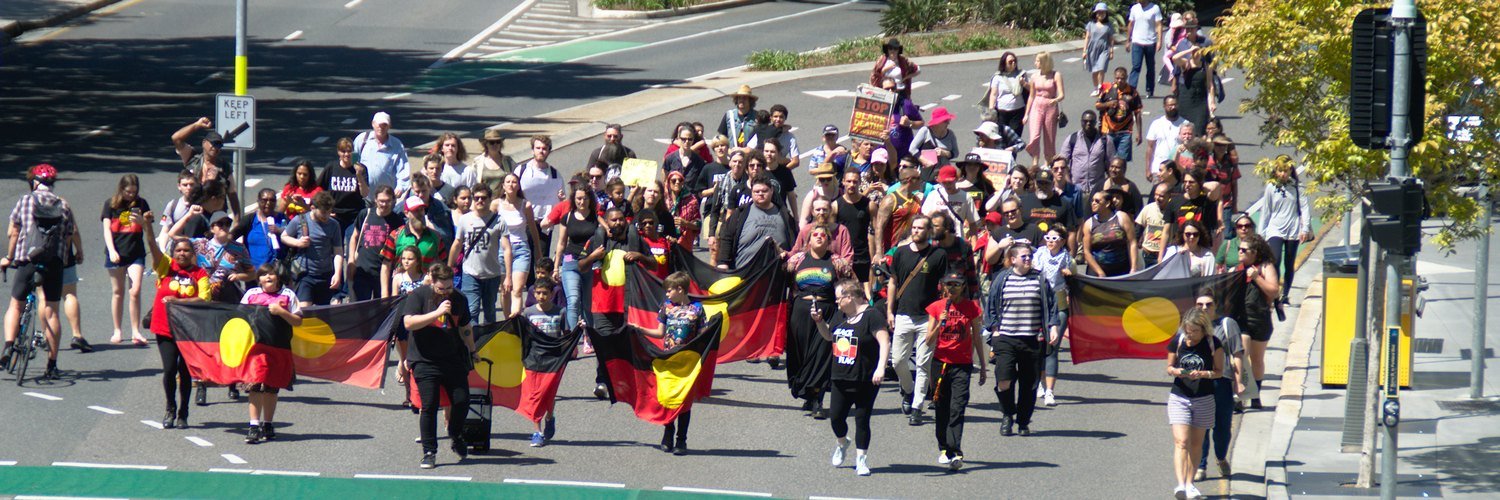
On 16 October 2026 a parliamentary committee accepted that the ‘Breach Bail, Go to Jail’ Bill is incompatible with human rights, and recommended that Parliament pass it unchanged. The Government will pass it, and Labor has told the committee in writing that it “will support” the Bill. The children it reaches first will be First Nations children.
A Government that writes down the harm
The Justice, Integrity and Community Safety Committee tabled its report on Friday 16 October 2026. It accepted that the Bill is not compatible with human rights under the Human Rights Act 2019. It then made one recommendation: that Parliament pass the Bill.1
Nobody had to dig for that finding. The Attorney-General volunteered it. Her statement of compatibility concedes that the new offence, the new bail test, and the overrides for watch-houses and detention centres breach human rights, and that the Act “is being overridden and its application is entirely excluded”.6 It could afford to be candid. In Queensland, the admission now costs nothing.
Knowledge makes this indefensible. A government that harms people by accident can plead error. A government that lists in its own statement the rights its law will breach, tables that statement in Parliament, and asks for the law anyway has no such plea. The written record of foreseen harm removes every excuse, and every member who votes on this Bill will have that record in hand.
An emergency that never ends
Section 43 of the Human Rights Act lets Parliament declare that a law applies despite its incompatibility with human rights, but only in exceptional circumstances. The Act gives its own examples: war, a state of emergency, and an exceptional crisis that threatens public safety, health or order.
The Attorney-General claimed the third. Serious repeat offending on bail, she argues, is that crisis. The committee agreed.1
Wars end. States of emergency end. These overrides do not. Parliament made the overrides for youth detention and watch-houses in 2023, they were due to lapse at the end of this year, and this Bill gives them five more.2, 4 The Government borrows the language of emergency to make the abnormal permanent, and that borrowing is a hypocrisy written into statute. A right that a government suspends whenever it finds the right inconvenient has stopped working as a right. It has become a licence the state issues to itself.
Whom the Bill will reach
The Government’s own figures, given to the press, say the new laws would have jailed 5,248 adults in the previous year, and likely 859 children as well. Queensland’s adult prisons are already running at 136 per cent of cell capacity, and the prison officers’ union warns of three inmates in cells built for one.5 On an average day in 2024–25, First Nations young people made up 71 per cent of those in Queensland youth detention, and were detained at 27 times the rate of non-Indigenous young people.7
Submitters told the committee that the Bill would fall hardest on First Nations people and on people with disability. The department noted the concerns, and replied that the Bill applies equally to all people charged in the specified circumstances.1
That reply confuses what a law says with what it does. A rule can use the same words for everyone and still land hardest on the people police already charge most, courts already remand most, and bail conditions already catch most often. Australian discrimination law calls that pattern indirect discrimination. Ethics calls it responsibility for foreseen consequences. When lawmakers know who will fill the cells and pass the law anyway, they have chosen who will fill them.
Moral philosophy has long allowed that a good act may cause harm as a side effect, under strict conditions: the harm must be unintended, proportionate, and no part of the means. This Bill fails at the last condition. It proposes to make Queensland safer by locking up more people, children among them. Detention is its instrument. The harm is the method.
Unjust: a punishment blind to the person
Just punishment answers to two measures: what the person did, and who the person is. A mandatory minimum discards both. Whatever the child’s age, disability, family, or prospects, and however minor the second offence, the judge must impose a year in detention.
Article 37(b) of the United Nations Convention on the Rights of the Child, which Australia ratified in 1990, requires that the detention of a child be used “only as a measure of last resort and for the shortest appropriate period of time”.8 A fixed year cannot be the shortest appropriate period for every child, because no single period suits every child. Queensland removed detention as a last resort from its Youth Justice Act in 2024.9 This Bill completes the turn. Detention becomes the first resort, at a set length.
The department told the committee that the mandatory year runs concurrently with the sentence for the underlying offence unless the judge orders otherwise.1 Michael Berkman, the Greens member for Maiwar, spelled out what that means in his dissenting report. Someone sentenced to more than a year for a serious offence will usually serve no extra time. Someone sentenced to a few months for a lesser offence must serve the full year.1 The law inverts proportion. It bites hardest on the least serious offenders, and it punishes the same act twice. The rule against double punishment ranks among the oldest protections in the criminal law, and the department told the committee it set that rule aside deliberately.
Injurious: what detention does to a child
Queensland already holds children on remand in the Wacol Youth Remand Centre, a police watch-house. The Inspector of Detention Services found that staff there give children far better care than a watch-house usually allows, and that this care does “not overcome the fundamental problem of detaining children in a centre that was designed and built as a secure watch-house.” Staff told him that a child’s mental health usually began to decline after about two weeks.10
The Inspector had recommended closing Wacol to children. He withdrew the recommendation because he expects this Bill to fill every youth detention bed in the state, leaving children to be held in watch-houses in large numbers and for long periods.10 The Government knows this. It has read the same report. It asks Parliament to send more children into a system its own Inspector says cannot hold them safely, for a minimum of a year.
The change to diversion removes the last point at which an adult must stop and think about a child. The Aboriginal and Torres Strait Islander Legal Service told the committee that the duty to consider diversion is a statutory safeguard against the needless criminalisation of children. The Queensland Law Society warned that once police no longer have to consider diversion, they will use it less.1 A caution keeps a child out of court. A charge starts a bail history. Under this Bill, a bail history is what triggers the mandatory year. The Bill injures children at every step: earlier charges, longer custody, worse places.
Hypocritical: promises made, promises broken
Labor’s statement of reservation calls the Bill the Government’s ninth attempt to fix its own youth justice and community safety laws, and has some fun with the title: “words that rhyme don’t stop crime.” The same statement declares: “To be clear, the Queensland Labor Opposition will support the Breach Bail, Go to Jail and Other Legislation Amendment Bill 2026.” Its conclusion repeats the pledge: “We will not stand in the way of these laws.”1 A party that calls a law a slogan and votes for it anyway has weighed its seats against children and chosen its seats. Michael Berkman alone dissented. On the human rights of children, Queensland now has no Opposition.
The Government’s advertisement shows hooded intruders in a family kitchen at 1.45 am. It shows no child. Yet the law’s heaviest weight will fall on children, most of them Aboriginal and Torres Strait Islander children. Fear sells the law. Children pay its price.
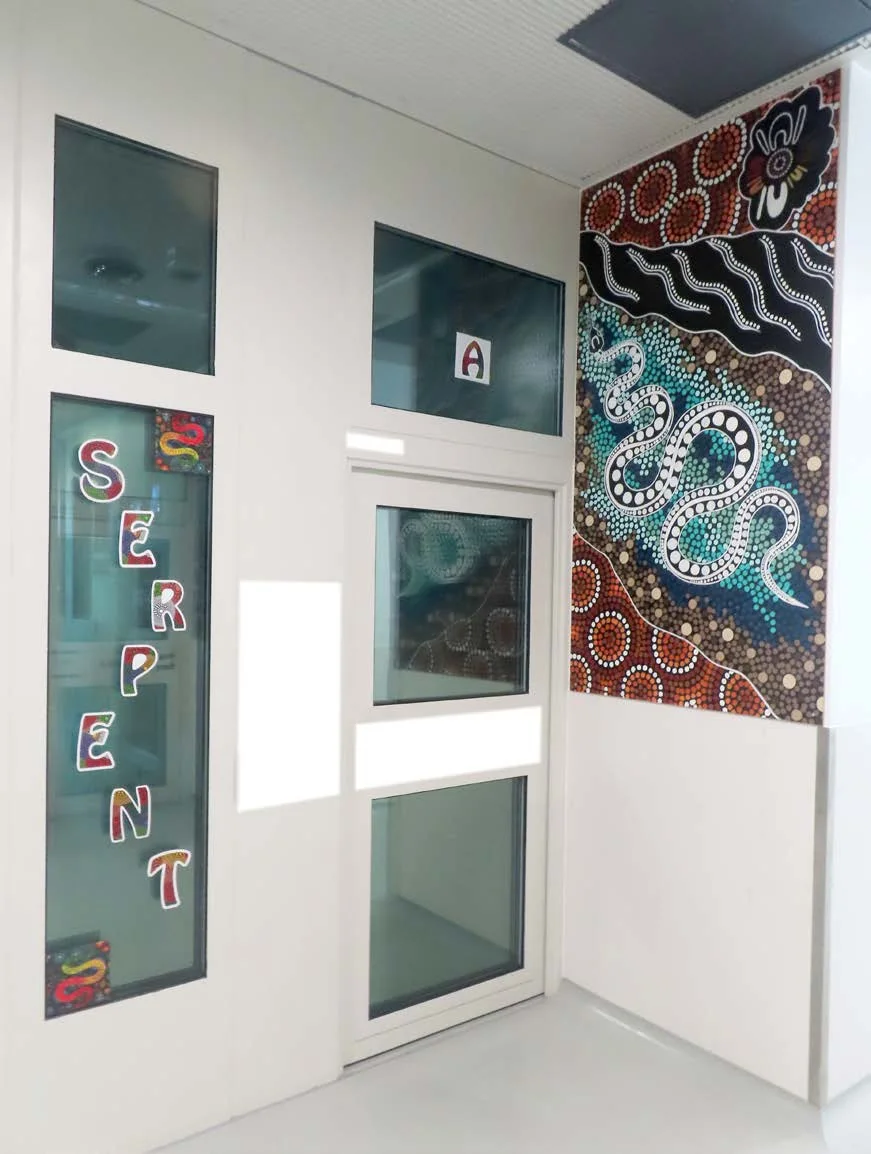
Queensland is a party to the National Agreement on Closing the Gap. Its Target 11 commits every government to cut the rate of First Nations young people in detention by at least 30 per cent by 2031.11 In my submission to the Productivity Commission’s 2026 review, I set out Queensland’s record against that target: the rate has risen by 8 per cent.12 Queensland signed the target, and now legislates against it. A law that, on the Government’s own numbers, would likely have jailed 859 children in a single year breaks the promise in the open.
What this demands
This Bill is wrong. It is unjust in its punishment, injurious to the children it reaches, discriminatory in its effect, and hypocritical in its defence. It should not pass. Labor should vote against it. Every member who votes for it will own what follows, by name, in Hansard.
Opposing it takes more than a letter. Labor supports the Bill because it has counted the seats, so change the count. Go to your state member’s office in person, and say plainly that your vote at the state election on 28 October 2028 turns on this Bill and on how your member voted.
Put your institutions on the record. Churches, unions, schools, universities, and professional bodies speak with an authority no single voter has. Ask yours to oppose the Bill publicly, before the debate, and in writing.
Stand behind the First Nations organisations that will defend these children in court and in community, with your time and your money. The Whom to Back section of my youth justice brief names them.
Fill the public gallery when the Bill comes on for debate, so members cast their votes in front of the people they claim to protect. And once the Bill becomes law, keep the count in public: demand that the Government publish, every month, how many children it holds under the new offence, by First Nations status, until Parliament repeals it.
See the seven actions this Bill demands
My evidence briefs set out the Government’s own admissions in detail: Queensland’s Bail Bill Admits It Will Lock Up More Children and Override Their Human Rights, and Queensland’s Inspector Finds Wacol Unfit for Children, Then Drops Its Call to Close It.
The committee did what the law asked of it. It found the breach and wrote it down. That finding leaves no member the excuse of ignorance. It turns each vote into a choice, and Queensland’s children, most of them First Nations children, will live with that choice for years.
Sources
1. Justice, Integrity and Community Safety Committee, Report No. 45, 58th Parliament: Breach Bail, Go to Jail and Other Legislation Amendment Bill 2026. Queensland Parliament, tabled 16 October 2026, including the Statement of Reservation of the Queensland Labor Opposition and the dissenting report of Michael Berkman MP.
2. Department of Justice, Parliamentary committee briefing note: Breach Bail, Go to Jail and Other Legislation Amendment Bill 2026. Brief to the committee, 3 September 2026.
3. Queensland Government, Automatic jail for repeat offenders. 30-second advertisement, published on YouTube and on the Government’s Making Queensland Safer page.
4. Change the Record, Submission to the inquiry into the Breach Bail, Go to Jail and Other Legislation Amendment Bill 2026. Justice, Integrity and Community Safety Committee, 16 September 2026.
5. ABC News, Prison guard union warns new Queensland bail laws will force “triple bunking” of inmates. 15 October 2026.
6. Queensland Government, Breach Bail, Go to Jail and Other Legislation Amendment Bill 2026: Statement of Compatibility. Tabled by the Attorney-General with the Bill, 27 August 2026.
7. Australian Institute of Health and Welfare, Youth justice in Australia 2024–25: Queensland. Average daily detention by First Nations status, young people aged 10 to 17.
8. United Nations, Convention on the Rights of the Child, article 37. Adopted 20 November 1989; ratified by Australia in 1990.
9. Human Rights Law Centre, Explainer: Making Queensland Safer Act 2024. On the removal of detention as a last resort from the Youth Justice Act.
10. Inspector of Detention Services, Wacol Youth Remand Centre inspection report. Office of the Queensland Ombudsman, tabled 8 October 2026.
11. Joint Council on Closing the Gap, Communiqué, fifteenth meeting. 21 November 2025, restating Target 11.
12. Philippe Foubert, Queensland Promised to Cut First Nations Child Detention by 30 Per Cent. Instead It Went Up 8 Per Cent. Submission to the Productivity Commission’s 2026 Review of the National Agreement on Closing the Gap, 15 October 2026.