Queensland’s Bail Bill Admits It Will Lock Up More Children and Override Their Human Rights
The Breach Bail, Go to Jail Bill is set to take effect on 30 November 2026. The Government’s own papers concede that it will hold more children on remand, in detention centres and police watch-houses, and that parts of it are incompatible with human rights. They give no estimate of how many children, and no cost.
Read the Bill as introduced (PDF) Read the submissions to the parliamentary committee
Attorney-General Deb Frecklington introduced the Breach Bail, Go to Jail and Other Legislation Amendment Bill 2026 on 27 August 2026. Its centrepiece is a new offence: a child who commits an Adult Crime, Adult Time offence while on bail faces at least one year in detention, with no power for the court to impose less.
Every Queensland Bill comes with explanatory notes and a statement of its compatibility with the Human Rights Act 2019. For this Bill, those documents concede the main criticisms made against it. They anticipate that it will put more children and adults on remand in youth detention centres and police watch-houses. They accept that, in limited circumstances, crowding may engage the right to protection from cruel, inhuman or degrading treatment, and that parts of the Bill are incompatible with human rights. The Government’s answer is to override the Human Rights Act for those provisions.
On 8 October 2026, the Inspector of Detention Services warned Parliament that Queensland may lack the room to hold the children this Bill will detain. My Wacol evidence brief sets out that report.
What the Bill Does to Children
One year, at least
Mandatory minimumA child convicted of an Adult Crime, Adult Time offence committed on bail must serve at least one year wholly in detention, up to a maximum of three. Victoria’s equivalent offence carries a maximum of three months and no minimum.
Source Explanatory notes, pages 3, 4 and 9.
“High degree of confidence”
New bail testPolice or a court must refuse bail unless the child satisfies them, to a high degree of confidence, that the child will not commit another such offence. The Government concedes that neither the child’s age nor the desirability of rehabilitation forms part of the test.
Source Explanatory notes, page 2; statement of compatibility, page 4.
Punished twice
Same conductThe explanatory notes concede “a high likelihood that the offender will be convicted and punished twice for the same conduct.” The Attorney-General’s statement of compatibility says the Bill does not limit the right against double punishment.
Source Explanatory notes, page 7; statement of compatibility, page 2.
Acquitted, still liable
Original chargeThe new offence still applies if the court later finds the child not guilty of the charge on which bail was first granted.
Source Explanatory notes, page 3.
“Must” becomes “may”
DiversionPolice will no longer have to consider a caution or other diversion before charging a child with any offence, including offences committed before the Bill takes effect.
Source Explanatory notes, pages 5 and 21.
30 November 2026
CommencementThe date the Bill fixes for its own commencement. The new Woodford Youth Detention Centre is due to open in 2027.
Source Explanatory notes, page 10; Queensland Ombudsman submission, page 5.
What the Government Admits
It is anticipated that these reforms will increase the number of children and adults held on remand or otherwise detained in youth detention centres or police watch-houses.
That sentence appears on page 5 of the statement of compatibility. On page 3, the statement accepts that requiring adults and children to serve a full year in custody “will affect the current capacity” of prisons and youth detention centres, engaging the right to humane treatment, and that, in limited circumstances, capacity pressures “may also engage the right to protection from cruel, inhuman or degrading treatment.”
The Attorney-General’s separate statement about exceptional circumstances concludes: “The Government accepts that these new provisions are incompatible with human rights and therefore the HR Act is being overridden and its application is entirely excluded.”
The Bill also renews, for five more years, the existing overrides that let the Government hold children in watch-houses. The explanatory notes say plainly what those overrides do: they “make it lawful for children to be held in watch-houses for long periods of time” (page 9). Without renewal, they would expire on 31 December 2026. A new override extends the same exemption to adults in watch-houses.
What the Government Leaves Out
How many children?
No estimateThe papers predict more detention and give no number. The Inspector of Detention Services told the committee: “It is not clear whether there has been any detailed modelling about how great the increase in the number of detainees will be, how quickly the increases will occur, or which facilities will be most impacted.”
Source Queensland Ombudsman and Inspector of Detention Services, submission 254, page 2.
At what cost?
No figureThe explanatory notes name the agencies that will bear the cost, then state: “These impacts will be addressed through normal government processes.”
Source Explanatory notes, page 6.
On what evidence?
No data citedThe override rests on “the prevalence of serious repeat offending committed while on bail.” None of the Government’s papers gives a figure for that prevalence.
Source Statement about exceptional circumstances, page 1.
Where will they go?
Watch-houses nowAt 6 am on 4 September 2026, with the Bill not yet law, 30 children had already spent more than seven days in police watch-houses across twelve towns and cities, from Southport to Cairns.
Source Queensland Ombudsman submission, pages 4 and 5, citing Queensland Police Service data.
What New South Wales Shows
New South Wales applies a narrower version of the test to children aged 14 to 17 charged with car theft or serious break-ins while on bail for the same kinds of offence. Its statutory review found that from April 2024 to December 2025 the test applied at 454 first bail appearances. Courts refused bail in about 70 per cent of them. Aboriginal and Torres Strait Islander children accounted for 79 per cent of the cases in which the test applied, and 84 per cent of the refusals.
Queensland’s version applies to every Adult Crime, Adult Time offence, for children aged 10 to 17. The Northern Territory’s equivalent test now faces a constitutional challenge in the High Court of Australia, brought by the North Australian Aboriginal Justice Agency. The Queensland Law Society urged caution, and suggested the committee consider the High Court’s ruling before the Bill proceeds.
What the Committee Heard
Queensland Police Union
Supports“The QPU strongly supports the Breach Bail, Go to Jail and Other Legislation Amendment Bill 2026 and its overarching objective of enhancing community safety, strengthening accountability for serious offending while on bail and restoring public confidence in Queensland’s bail system.”
Source Submission 230.
Victims’ Commissioner
Welcomes“I welcome measures that enhance community safety, strengthen accountability for offending while on bail, and reduce the risk of future victimisation.”
Source Submission 248.
Voice for Victims
Supports the intentSupports the Bill’s intent, and asks Parliament to judge it by whether it reduces offending and is “supported by sufficient correctional capacity.”
Source Submission 217.
Queensland Ombudsman
WarnsSupports the goal of community safety, and warns that “further overcrowding of detention facilities will reduce community safety.” Does not support the Human Rights Act overrides.
Source Submission 254.
Queensland Family and Child Commission
Warns“Punishment is an event; behaviour change is a process.”
Source Submission 251.
ATSILS Queensland
Opposes“We strongly oppose the passage of this Bill,” in part because its measures will “worsen overrepresentation of Aboriginal and Torres Strait Islander peoples in the criminal custody system.”
Source Submission 255.
National Commission for Aboriginal and Torres Strait Islander Children and Young People
OpposesPrimary recommendation: the Bill “to not be passed.”
Source Submission 224.
Legal Aid Queensland
Opposes“LAQ opposes the Breach of Bail, Go to Jail and Other Legislation Amendment Bill 2026.”
Source Submission 232.
Queensland Law Society
Opposes“The Society does not support the passage of the Bill.” It sees a real likelihood that the Bill’s effects in Queensland will exceed those in New South Wales.
Source Submission 252.
Queensland Human Rights Commission
WarnsThe Bill “will have a disproportionate impact on Aboriginal and Torres Strait Islander people,” most of all on Aboriginal and Torres Strait Islander children with disabilities.
Source Submission 108.
First Nations Children Will Bear the Weight
On an average day in 2024–25, First Nations young people made up 71 per cent of those in Queensland detention, at 27 times the rate of non-Indigenous young Queenslanders. In the same year, Queensland police held 6,815 children in watch-houses or police stations; more than 500 spent at least five days there, and 59 spent more than fifteen.
The Bill counts none of this. It contains no estimate, by First Nations status or any other measure, of the children it will hold. The New South Wales results show whom a test of this kind reaches first.
Questions to Put to Your Member of Parliament
- How many more children does the Government expect to hold on remand under the Bill in its first year, by First Nations status and region?
- Where will those children sleep between 30 November 2026 and the opening of Woodford in 2027?
- What will the Bill cost, and which budget will pay for it?
- What evidence of “the prevalence of serious repeat offending committed while on bail” justifies overriding the Human Rights Act?
- Will the Government wait for the High Court’s ruling on the Northern Territory’s equivalent test before the vote?
Find your Queensland state member See the First Nations organisations to back
The Sources Behind the Figures
The Bill
27 August 2026Breach Bail, Go to Jail and Other Legislation Amendment Bill 2026, as introduced.
Explanatory notes
27 August 2026The Government’s explanation of each provision, its cost, and its consistency with fundamental legislative principles.
Human rights statements
27 August 2026The Attorney-General’s statement of compatibility and statement about exceptional circumstances under the Human Rights Act 2019.
Committee submissions
September 2026Justice, Integrity and Community Safety Committee: submissions 108, 217, 224, 230, 232, 248, 251, 252, 254 and 255. The Queensland Law Society’s submission reports the New South Wales statutory review figures; the National Commission’s reports the 2024–25 watch-house figures from the Childrens Court of Queensland annual report and the 10 to 17 age range.
Inspector of Detention Services
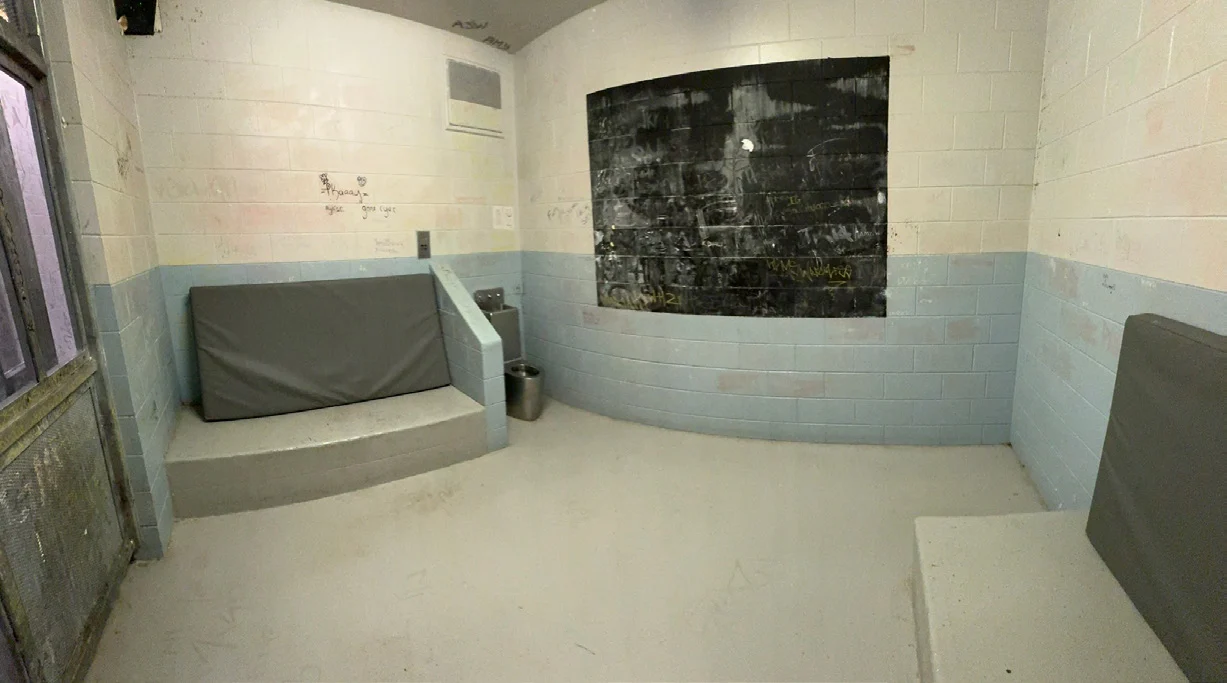
September 2024Cairns and Murgon watch-houses inspection report: Focus on detention of children, the source of the photograph and its caption.
Inspector of Detention Services
8 October 2026Wacol Youth Remand Centre inspection report, tabled 8 October 2026: the capacity warning cited in the opening of this brief.
Youth justice in Australia 2024–25, Queensland overview: First Nations detention numbers and rates.